What is a metroidvania?
Spend any time in online communities dedicated to the metroidvania sub-genre and you will witness heated debates about which games belong and which do not. Nobody seems to have quite the same definition! Having made many such games myself, this is something I think about a lot. And yet, I always find those online discussions frustrating rather than enlightening because I believe they go at it the wrong way.
How it usually goes
When debating what's a metroidvania, most fans approach the definition as a list of features that must either be present or avoided. Game A is a metroidvania because it has feature X and Y while Game B isn't because it lacks them or has feature Z instead. It sounds like a reasonable way to go about it, but not only does it fails when it comes to classifying some tricky games, I also believe it misses the forest for the trees.
To take a well-known exemple from another medium, this "feature list" method is how you end up classifying Star Wars as a science-fiction movie because it takes place in space and has spaceships. And yet, the movie is so completely uninterested in science and how it shapes our society that half the characters are wizards.
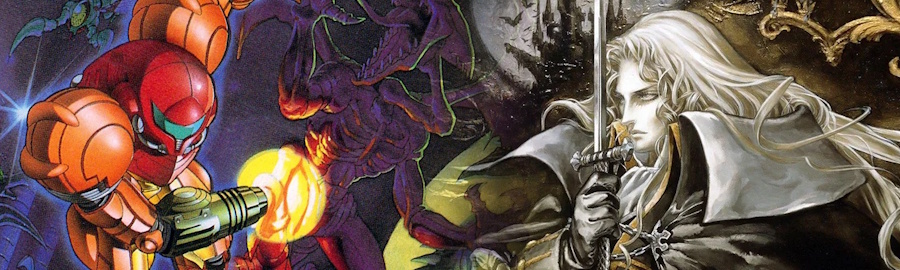
But if we were to look at a list of required features, what would they even be? Let's go back to the origin of the word to see if we can figure something out. 'Metroidvania' started as a (often derogatory) nickname for Castlevania Symphony of the Night, an entry in Konami's beloved series that played more like a Metroid game than what players came to expect from Castlevania. Kinda the same deal as Zelda The Wind Waker being called 'Celda' for a while, due to its divisive art-style. Of course, languages are living things and the term later came to describe an entire genre rather than a specific game and its sequels (which led to coining a new term for them: 'igavania', named after the game director). Can we look at what Symphony of the Night did differently from previous Castlevania games, especially what's similar to Metroid, to get at the core of the definition?
Two things jump to my mind. First, the castle is now one big interconnected place rather than a mostly linear sequence of levels. And two, the powerups are permanent upgrades to your moveset that unlock new paths, rather than situational weapons. (There's also the whole RPG angle, but it obviously didn't come from Metroid.)
Going from there, the features usually associated with the genre are a continuous world with backtracking where some places are locked behind movement abilities.
Again, that sounds reasonable. So what's the problem?
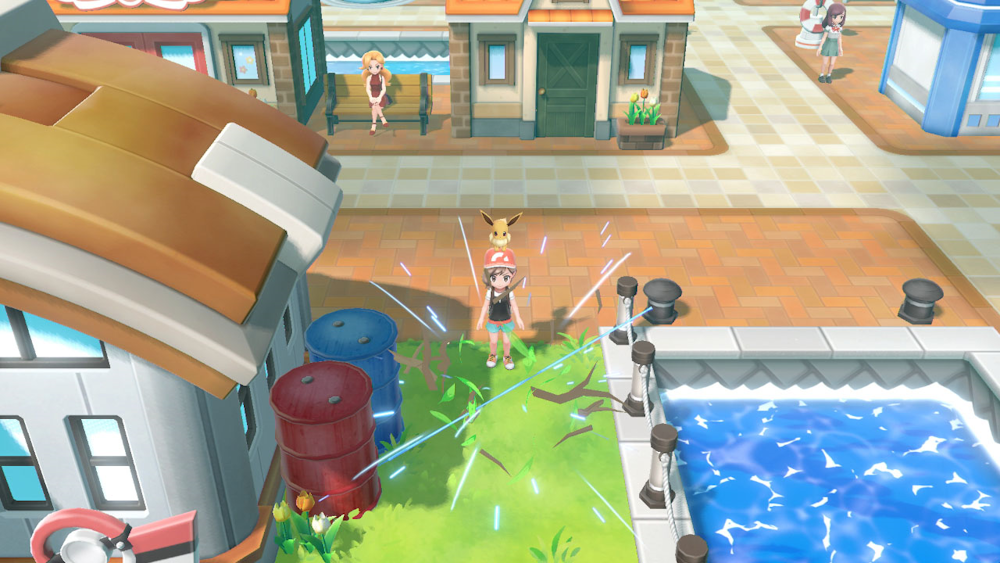
Let's take a silly example: are the GameBoy Pokémon games metroidvanias? They're classic JRPGs, so obviously not… right? And yet they do feature large interconnected worlds locked by obstacles requiring new movement abilities that you collect during your adventure, like Flash, Cut or Surf. They match the list of features laid out before, but they're very far from what's on your mind when you hear 'metroidvania'.
To keep the definition from becoming meaningless, some people will add that a metroidvania must also be a side-scrolling platformer. But then what about Metroid Prime, the 3D first-person-shooter Metroid? And are Metroid and Castlevania Symphony of the Night even platformers to begin with? Sure, they have platforms you can jump on but it's pretty telling that by the end of both games you will be too busy flying to even land a feet on them.
Aiming for a list of empirical criteria leads to madness. This is how you end up with silly graphics picturing multi-dimension axes going from 'Purist' to 'Rebel' or whatever. They can be funny but I really don't think they're helpful.
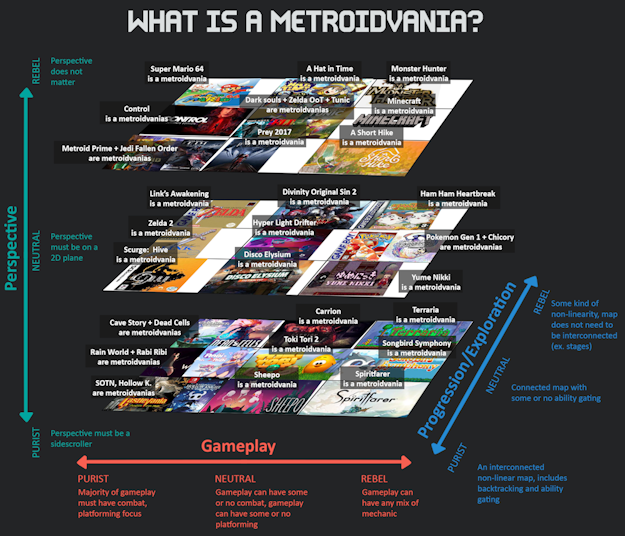
Is there a better way?
It's all about focus
Stories have themes, we know that from school. It's not just for high-brow stuff either: even a kid movie like Toy Story 2 is about choosing a love that will eventually end and hurt you rather than settle for unfulfilling comfort. Stories usually have one big central theme supported by smaller side themes. We're used to that.
What if I told you that gameplay also has a theme of its own? Something it's about, a big central idea supported by its mechanics.
Super Mario Bros' narrative may be about saving a princess (which we could maybe boil down to a theme of 'dedication' or 'perseverance' if we're feeling generous), but its gameplay is all about the idea of 'momentum', implemented through its complex jumping mechanics. That's what makes it a platformer, when Symphony of the Night isn't!
That's what I mean by 'focus'. The story has a theme, but the gameplay also does. Usually the two are adjacent and complement each other, when they're not outright the same.
That's where my frustration with the usual discourse comes from: I feel like people are stuck looking at a list of features to describe a metroidvania when the right question should be 'what is this game actually about?'
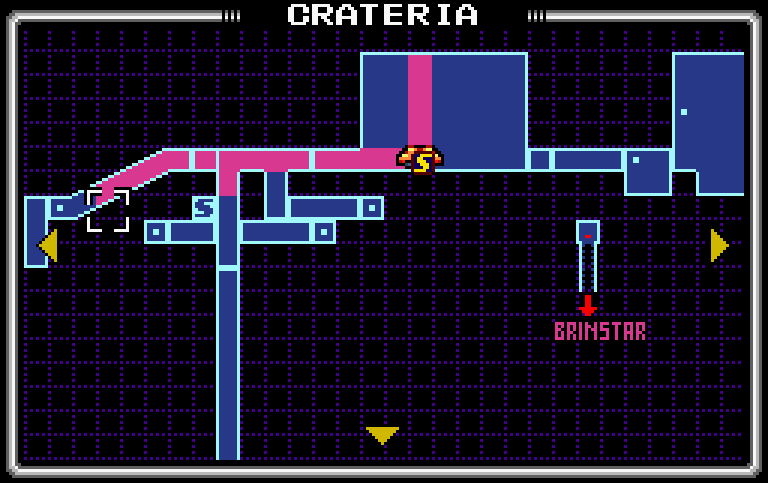
Going back to the original comparison between Symphony of the Night and its predecessors, I would say metroidvanias are about searching for a path forward. That's what you actually do in those games. That's what Metroid was all about. Though there's one added twist to elevate them from mere labyrinths: some paths are only practicable after evolving your moveset.
So here's my definition: a metroidvania is a game about looking for a path forward using new movement abilities. That's why some people would rather call them 'search-action' games, though I think this ship has sailed and we're stuck with the name we have.
Situational matches
Igarashi is on record admitting Symphony of the Night was inspired just as much by Zelda as it was by Metroid, so it makes sense to question this series' place in the genre.
On the surface, there's plenty of exploration in Zelda and your progression does map over an evolving moveset. But to me, Zelda games aren't metroidvanias because looking for a path forward isn't the focus. You basically always know where you should go next and in what order. The path is obvious, it's just blocked by a puzzle or an NPC interaction.
And yet, when you're inside dungeons, it does come into focus. I believe there's an argument to be made that the best Zelda dungeons are actually mini-metroidvanias, even if the rest of the game isn't. (Though the progression is very shallow because they only feature one movement upgrade around the middle.)
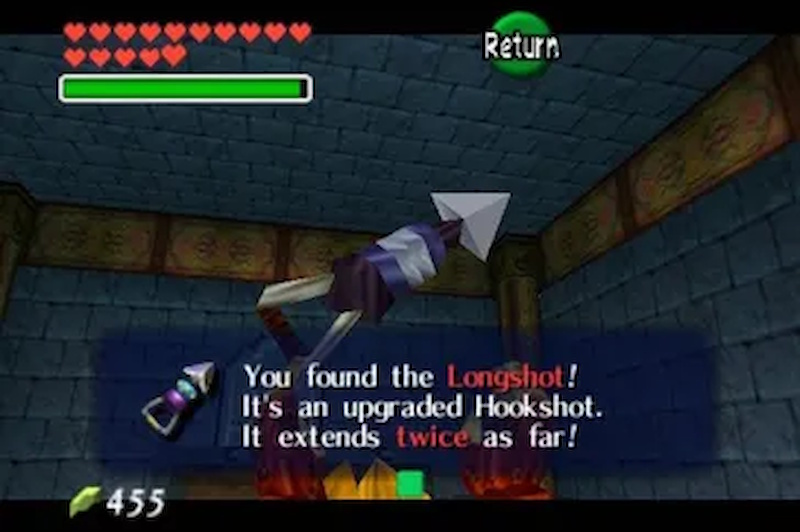
To really drive home this idea of 'focus', I do consider the Zelda randomizers mods to be metroidvanias. That's right, it's basically the same game that I said wasn't a metroidvania, with all the same elements, but suddenly this new game mode makes it one. Because when the game is randomized, the path laid out by the developers goes through the window and it's on you, the player, to find another. Finding a movement upgrade in a random 'check' opens new opportunities to explore. Again: same features but different focus.
Also consider a game like The Messenger that switches focus halfway and suddenly becomes a metroidvania.
A word on world design
Metroidvanias are often said to be “open world”, and I think it's very wrong.
While an open world game can certainly be about looking for a path forward, it would fail the requirement for this path to be tied to new movement abilities. You can go everywhere you want in Breath of the Wild because the progression is linked to a hidden power level that a skilled player can ignore outright. Hyrule Castle isn't closed to you, it's just very difficult to navigate when Link is still in his underwear, armed only with a stick. If suddenly you needed Revali's Gale to enter Hyrule Castle, it would cease to be truly open.
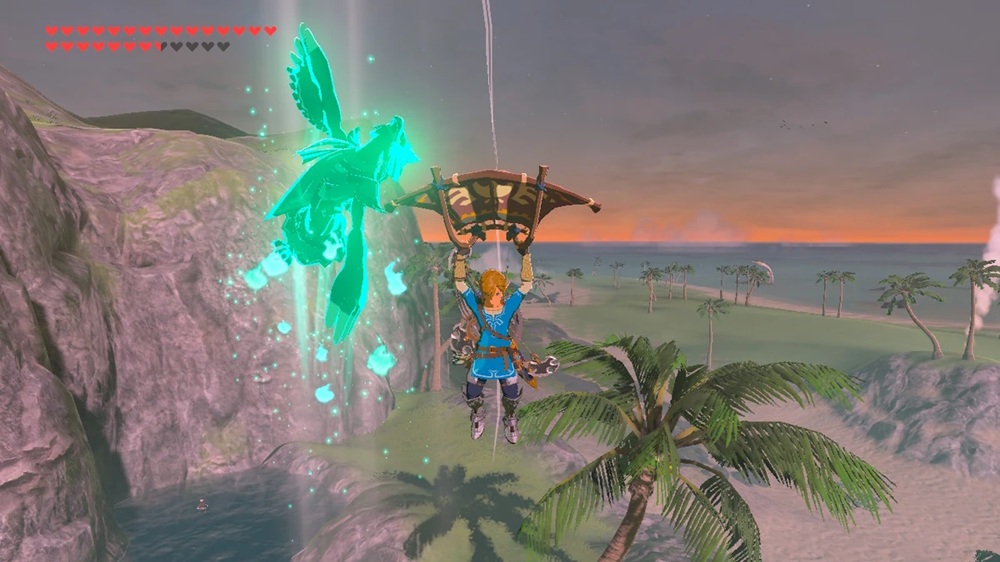
The two genres are contradictory by design. Though it must be said that the large, interconnected and often seamless worlds found in Metroidvanias can look a lot like open worlds from afar, so I understand the confusion.
To add a word on backtracking, I believe it's merely a consequence of this focus on looking for a path forward. To truly be able to explore, you need multiple options and the "right way" can't be obvious. That's why most metroidvanias require you to revisit earlier environments, because if the way forward was always the next one over, you wouldn't be searching.
Letter and spirit of the law
Is Outer Wilds a metroidvania? It's barely an action-adventure game to begin with and the movement upgrades are based on knowledge rather than save flags...
And yet, enough people felt like it qualified to coin the 'metroidbrainia' sub-sub-genre (yes, the original term was already ridiculous and we keep digging, but it is what it is).
I would argue Outer Wilds is definitely about looking for a path forward in a big interconnected world using your progressively larger moveset. That the upgrades are unlocked by learning new information rather than adding an item to your inventory is ultimately pretty inconsequential to the global experience. You explored the world, learned about a new movement trick you could do and suddenly you're thinking of previously locked places where you could use your newfound ability to progress. That's the metroidvania game loop!
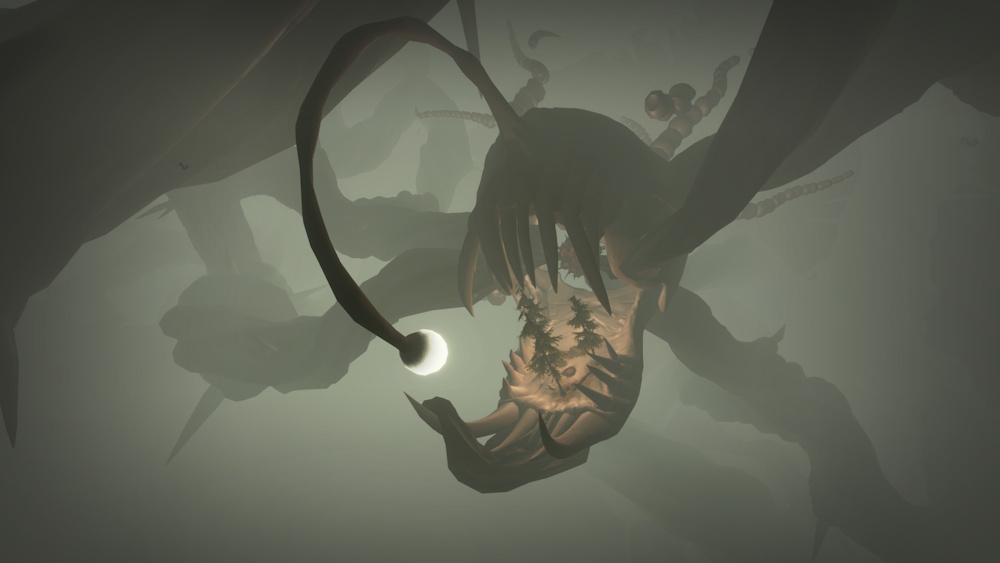
Now, a good counter-argument is that most abilities in Outer Wilds are pretty situational and don't meaningfully change your playstyle across the board. Do they really qualify as movement abilities if you always perform the same old actions to move around? On the other hand, the feeling of "recontextualization" (when a new ability makes you look at your environment in a whole new light) that is so primordial to a metroidvania has rarely been executed so well. And having you search for a path forward in time as well as in space is a pretty fresh take on the genre. In the end, whether or not you agree with this section will come down to what you remember most from that game, a point we will revisit very soon.
Outer Wilds matches the spirit of the law even if it doesn't strictly follow the letter and that's what matters if we want to keep the door open to fascinating new experiences. (And of course, those "knowledge-acquired abilities" have precedents in both Super Metroid and Castlevania Symphony of the Night. These games already recognized that movement abilities need not be physical items in your inventory.)
Metroidvania is in the eye of the beholder
Metroid Dread is another thorny edge case because it pretends to be about searching for a path forward but actually isn't. It looks like you're exploring but you can't really get lost because the game often locks all the wrong paths and railroad you toward the solution. Does it qualify then? Depends on who you ask! Some players will never notice how heavy the developer's hand is and will have the full metroidvania experience while others won't.
Who's right and who's wrong? Both! A metroidvania is first and foremost an experience, which is something very personal by definition. So you see, there's no possible end to this debate!
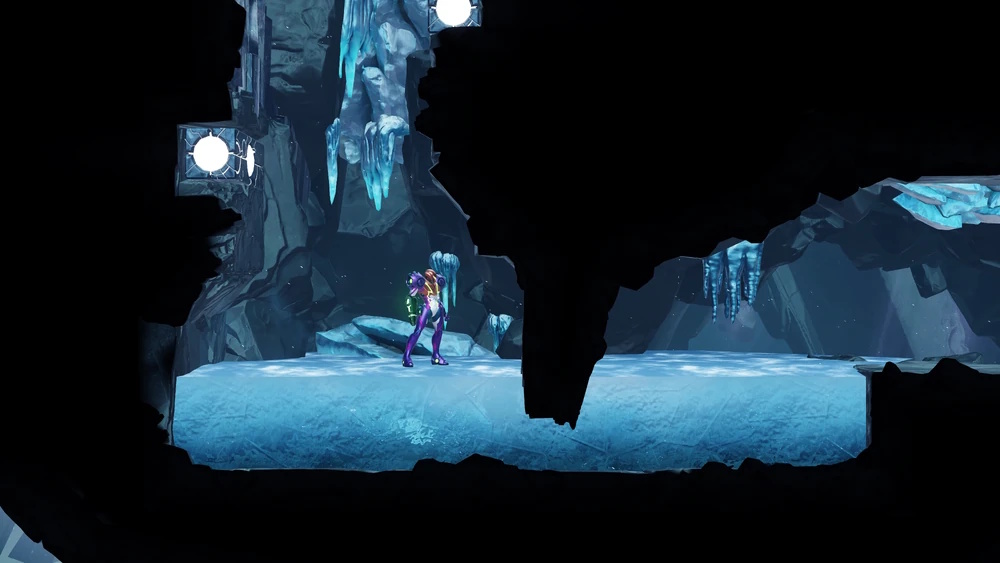
Metroid Dread is a fascinating example because while it constrains exploration when played normally, it also allows for sequence-breaking. It's not an oversight on the developers' part, but a few purposeful tweaks accounting for speed-running, a practice the series always encouraged. When sequence-breaking, searching for the path forward is yet again front and center, flying high those metroidvania colors. And because this challenge is thrown at players after their first playthrough, it can be seen as a more difficult "New Game+", another exemple of a situational match.
Okay so Metroid Dread tries to have its cake and eat it too by making you feel like you're exploring when you're really locked inside a fancy corridor, but what about games that genuinely aim for that sweet 'search-action' gameplay but fall short? Games like Metroid Prime where the progression is so arbitrary and unbalanced the developers needed to add constant hints, undermining their own design? I would say it still fit. And that Metroid Prime manages to be such an excellent game despite not doing justice to its central theme brings us to our next point...
Through the lens
All this fluidity where games are or are not metroidvanias depending on who plays them and how brings me to the idea of 'lenses'.
Genres are a useful taxonomy and marketing tool, suited for communication, but it's terrible for game design analysis. A game is never just one thing.
Also, most of the foundational games in the genre were never conceived as metroidvanias. Nintendo probably doesn't know (and definitely doesn't care) what a metroidvania is. Igarashi learned of the word somewhat recently. Team Cherry is on the record stating they didn't care if Hollow Knight was one or not.
And yet, we can definitely study Hollow Knight through the metroidvania lens. Then it's less about 'is this game actually a metroidvania?' and more about 'if we look at this game as a metroidvania, is there something interesting here?'.
To me, it's a way more potent question.
On the same topic

How to create your own Metroidvania
A guide for game designers to create your own metroidvania games, based on exemples from my experience with the genre.
My games